
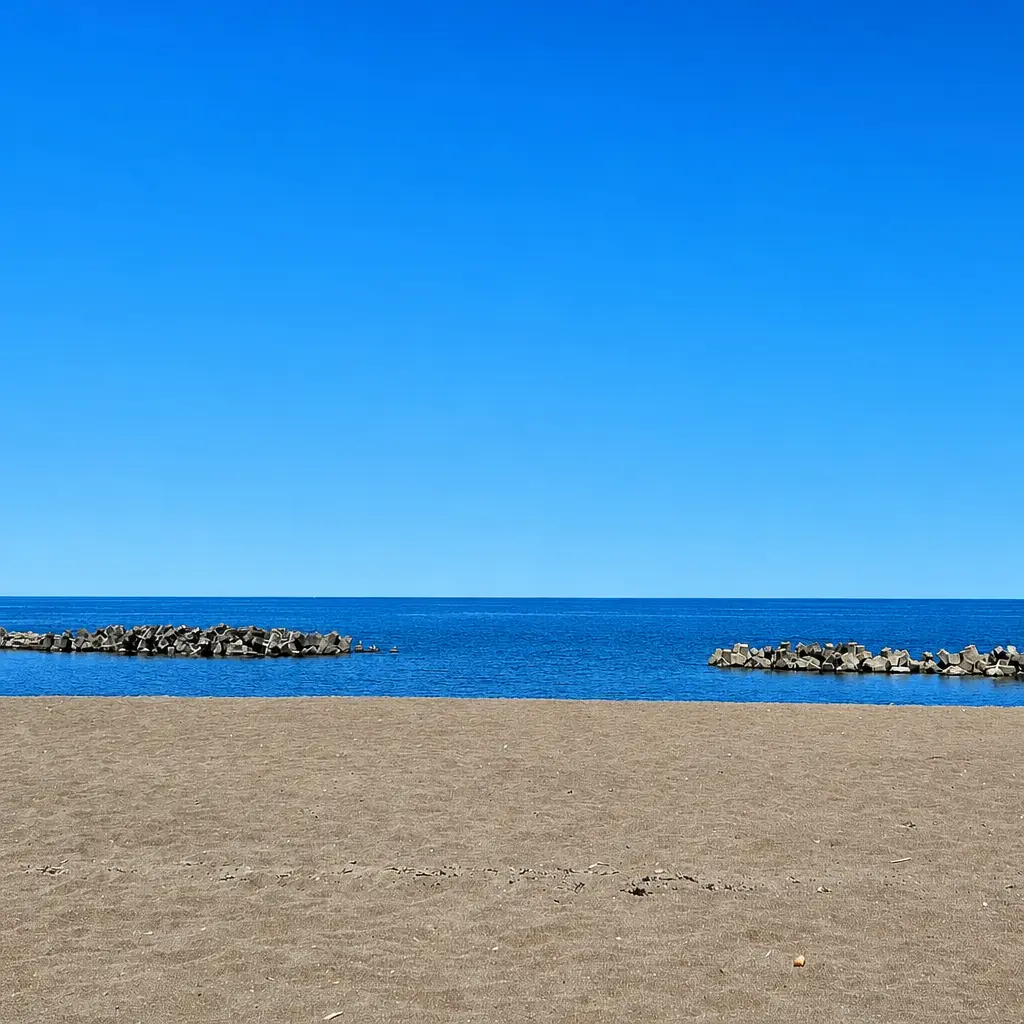
Taro's Beach
A beach house at Kujiranami Beach — Kashiwazaki, Niigata
Kujiranami is one of Japan's hundred finest shores: clear water, rock pools right next to the sand, and the sun setting into the Sea of Japan. Taro's Beach is an umi-no-ie — a beach house. You pay once at the door, and the seat is yours for the day, along with hot showers, changing rooms, a few things you can rent, and a kitchen that takes its food seriously. Families settle in at seven in the morning and leave when we close. Here's everything worth knowing before you come.
The basics
- Season
- July 11 – August 23, 2026 (provisional)
- Hours
- 07:00–17:00 (kitchen takes its last order at 16:30)
- Address
- Kujiranami 2-3, Kashiwazaki, Niigata 945-0855, Japan — in Japanese: 〒945-0855 新潟県柏崎市鯨波2丁目3. Useful if you need to show it to someone or type it into a map.
- By car
- About 10 minutes from either Yoneyama or Kashiwazaki interchange on the Hokuriku Expressway. Our car park is right beside the building. It can't be booked and works first come, first served — 10:00 to 13:00 is the peak and it does fill up on busy days, in which case you can use the car park at Onodachi Park nearby.
- By train
- One minute on foot from JR Kujiranami Station.
- Paying
- Cash, PayPay and other Japanese cashless apps. We'd bring cash to be safe.
- Dogs
- Welcome on a lead, at no extra charge, and they can come up onto the tatami with you.
We're a summer business: we open in mid-July and close in late August, and we're shut the rest of the year. The exact dates for this season are listed just above, and next season's go up on our Instagram as soon as they're set. We're one of the beach houses on Kujiranami Beach, not the operator of the beach itself.
Getting here
By car we're about ten minutes from either Yoneyama or Kashiwazaki interchange on the Hokuriku Expressway, and the car park is right next to the building. Most of the people who come to us drive over from the landlocked prefectures inland — Gunma, Nagano, Saitama — and it's an easy run. On a busy day, arriving before nine is the safe bet for a space.
By train, Kujiranami is unusually painless. The beach is a minute's walk from JR Kujiranami Station on the Shinetsu Main Line: you come out of the station, head towards the water, and you're on the sand. Kashiwazaki is one stop away, and some trains run through from Nagaoka without a change. From Tokyo, take the Joetsu Shinkansen to Nagaoka and change there.
One warning about the trains: at some times of day there's only one an hour. Look up your train home before you get in the sea and decide which one you're on — that's what the locals do.
If you have half an hour spare on the way back, the next station towards Naoetsu is Omigawa, known as the station closest to the sea in Japan. The platform looks straight out over the water.
What it looks like
Tap any photo to see it bigger.
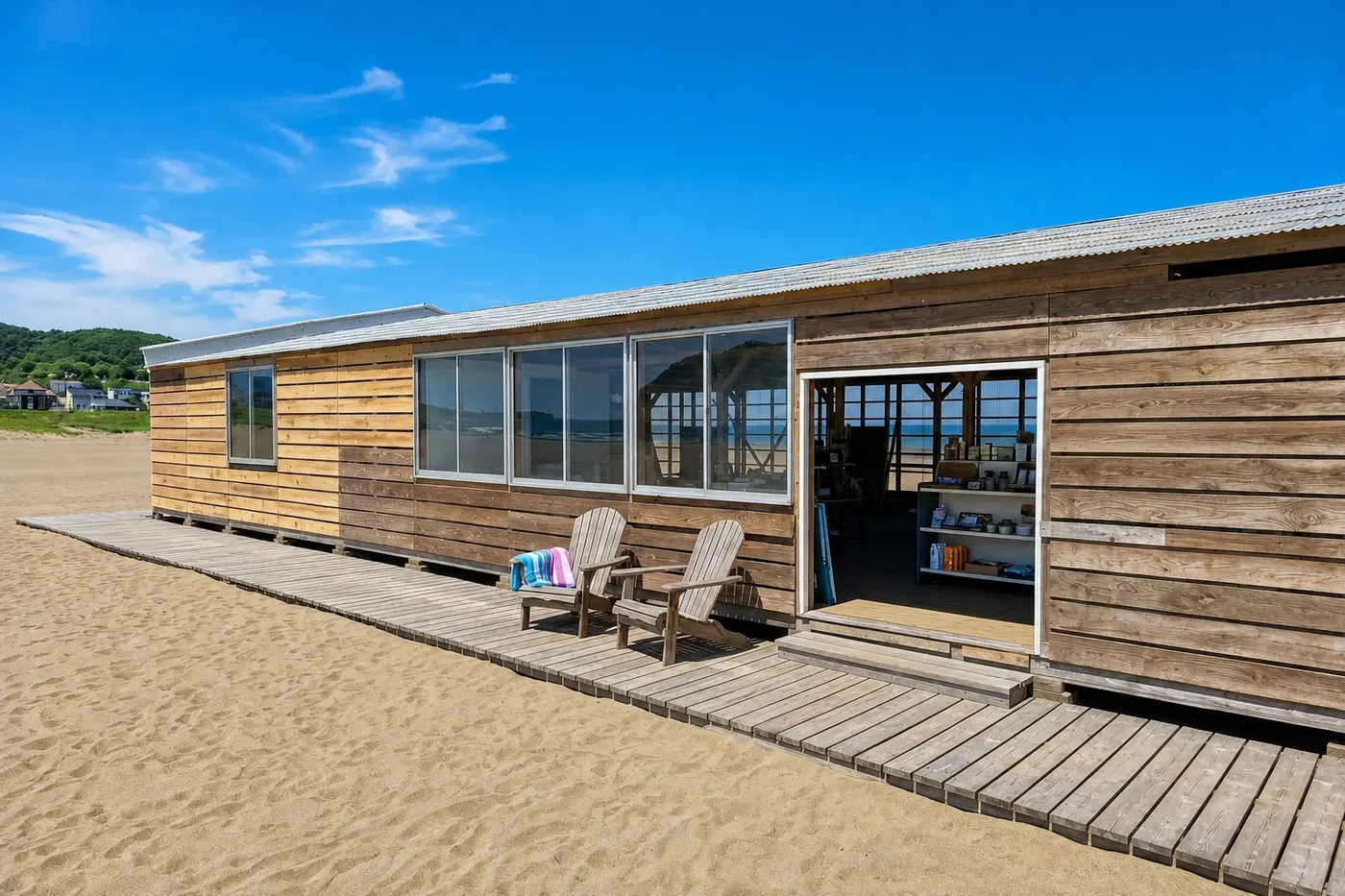
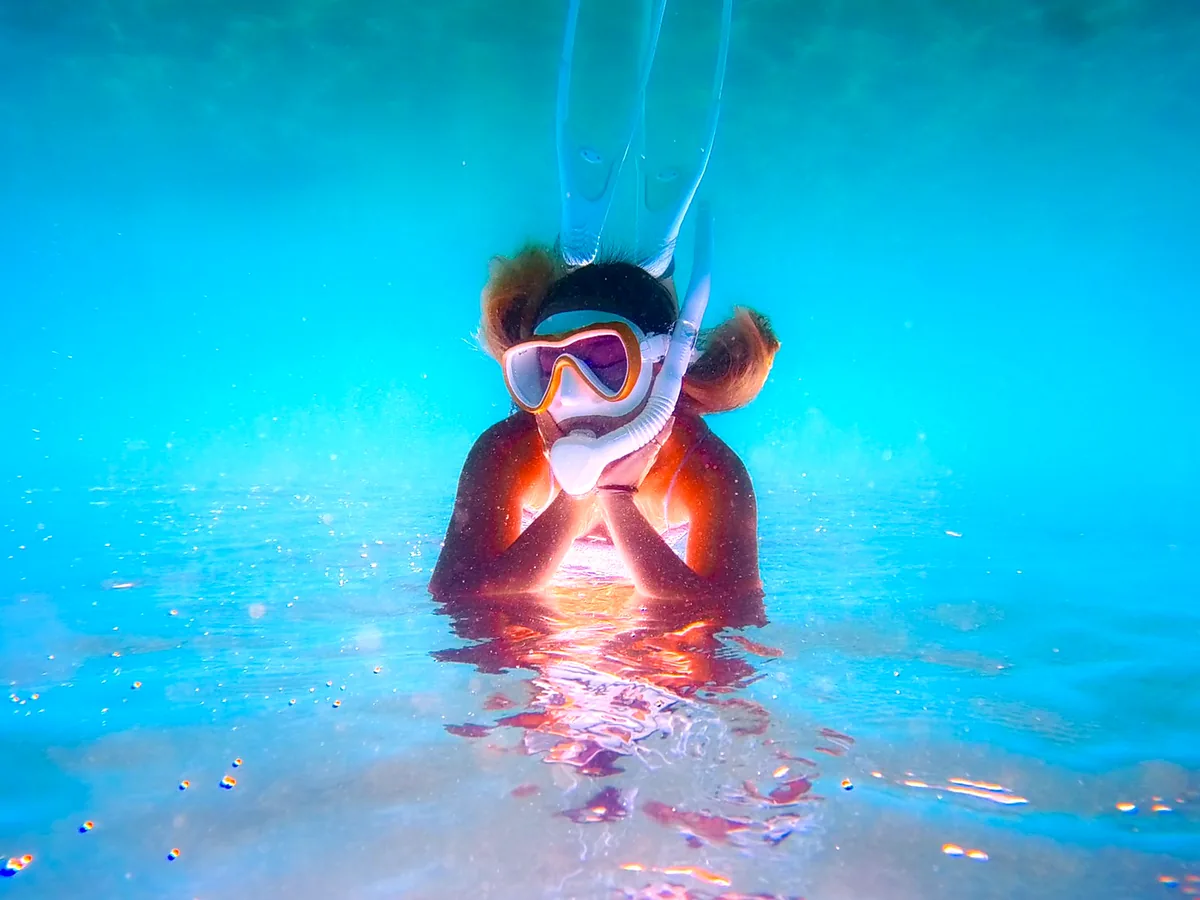
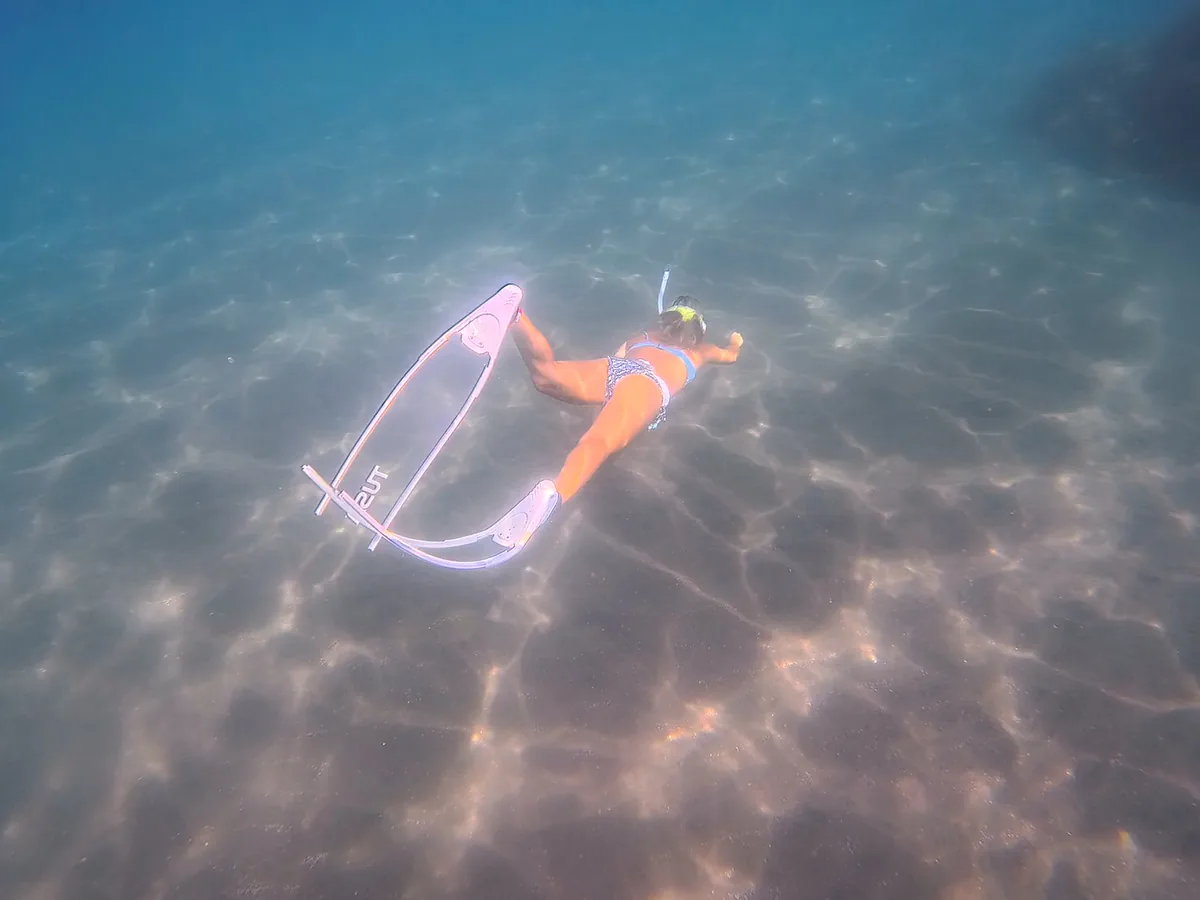
How a beach house works
If this is your first time at one, here's what happens when you arrive.
- Leave the car in the car park.
- At the entrance, take your shoes off and put them in one of the baskets — then take the basket with you.
- Pay the facility and parking fees at the reception desk. You'll get a wristband; keep it on while you're here.
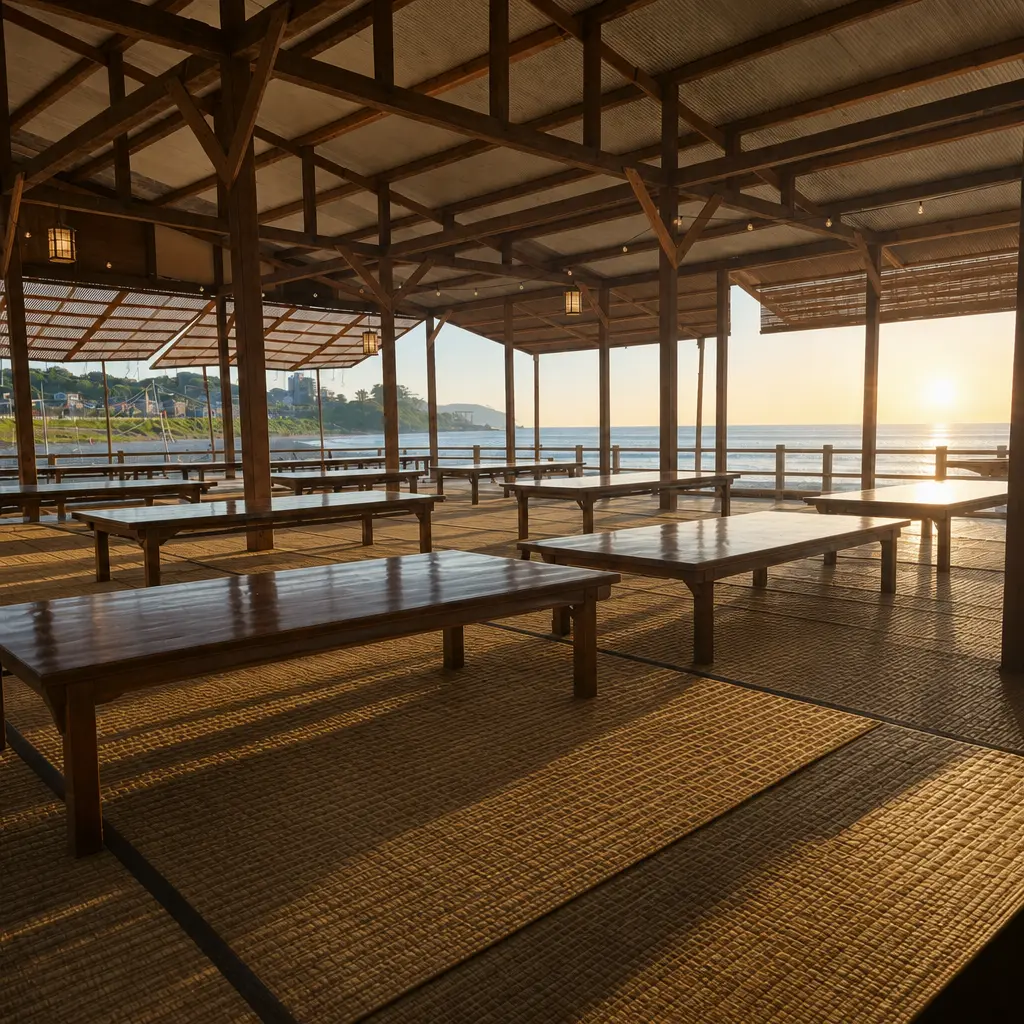
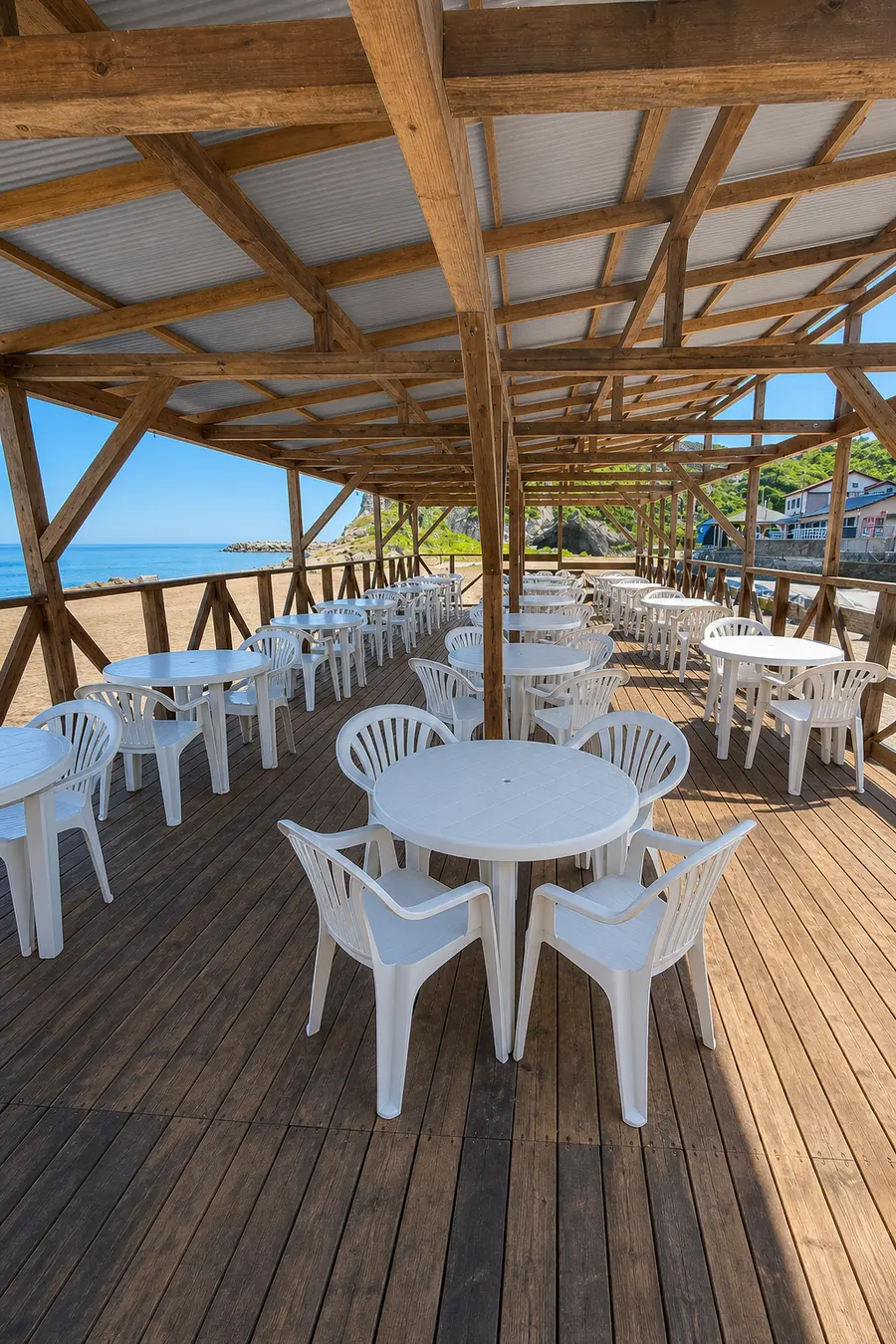
- Take any free seat. There's tatami, where you sit on the floor, and the dining bar, which has chairs.
- Tell reception your table number — it's printed on the QR code on your table. Use the same number when you order.
- Food and drinks are not included and are paid at the end: settle up at reception before you leave, and before closing time.
What it costs
- Facility fee — adults ¥1,500
- Facility fee — primary school children (grades 1–6 in Japan) ¥1,000
- Facility fee — children not yet at school ¥800
- Facility fee — under 3s Free
- Car park — per car, per day, for our customers ¥1,000
Every beach house on Kujiranami charges the same fees, so you're not paying extra by picking us. You pay the facility fee once, when you arrive, and it covers your seat for as long as we're open.
The facility fee covers
- Hot showers — as of the 2026 season, we're the only beach house on Kujiranami that has them
- Toilets with heated washlet seats
- Changing rooms
- An electric pump for your inflatables
- Your seat, all day, with nobody moving you on
Eating and drinking
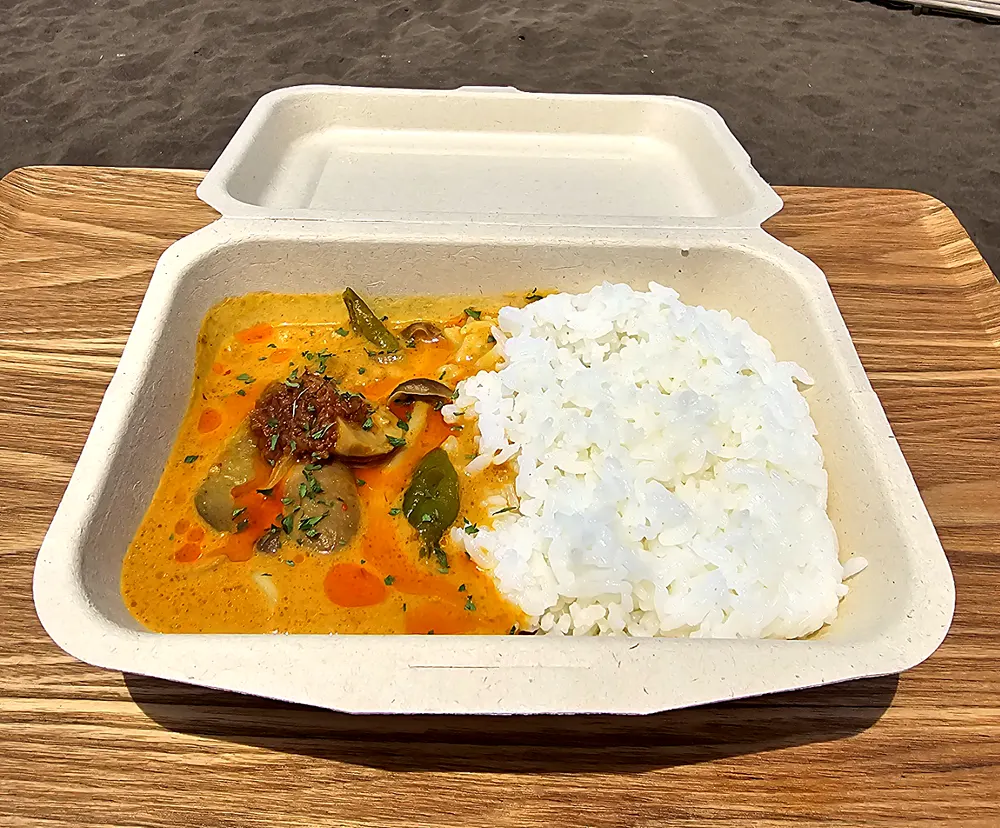
The kitchen is why a lot of people drive here in the first place. The Thai curry is made by staff who trained in Thailand, the ramen by someone who came from a ramen shop, and there's tare-katsu-don, the pork cutlet rice bowl Niigata is known for. For the children: shaved ice, churros, waffles and smoothies. We also pour our own craft beer, Kashiwazaki Ale, from the tap — on draught you'll only find it here and at the events we take it to. Plenty of soft drinks for whoever's driving. You order from your seat with the QR code on the table, so nobody has to queue in a wet swimsuit.
What to bring, and what you can leave at home
Kujiranami is an easy beach to travel light to, because most of what you'd normally pack is either for rent or for sale once you're here.
- Swimsuit, and a rash guard if you have one — wear it under your clothes and changing gets much simpler
- Towels. Two each is comfortable: one to dry off, one for shade
- A hat and sunglasses. The glare off the sand is stronger than people expect
- Cash and your phone. We take PayPay, but the small shops nearby are often cash only
- Your health insurance card, in case of a cut foot or too much sun
You can leave these at home
- Sunscreen and drinks — we sell both, so you can top up here
- Beach sandals — there's a shop right next to us
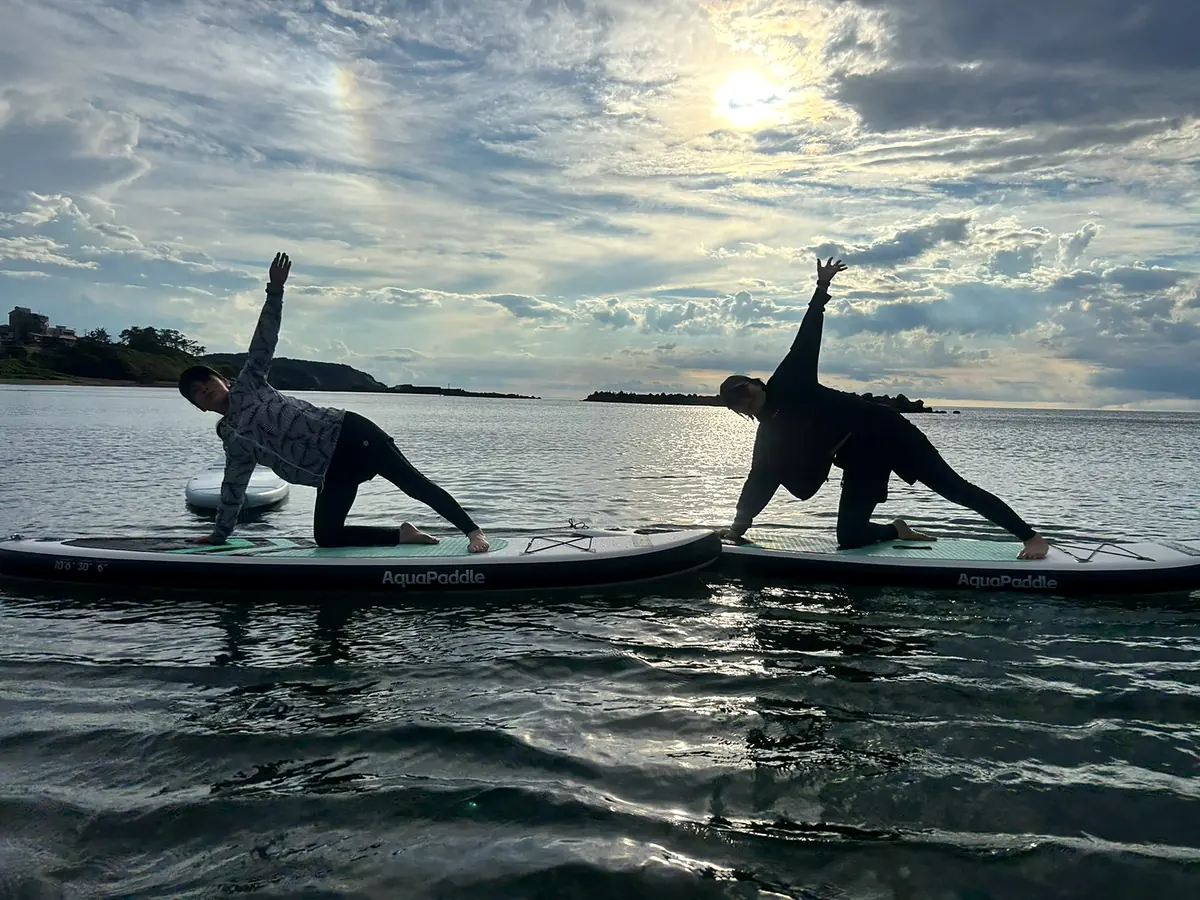
- Rings and floats — we have some to rent, so you can skip the inflating. What's available changes from day to day, and we don't rent SUP boards or kayaks, so message us first if you need something specific
- Anything for finding somewhere to wash and change — the hot showers, changing rooms and washlet toilets are here. Do bring your own toiletries and a dry change of clothes
With small children, marine shoes are the one extra genuinely worth packing, because the rocks have sharp edges. Spare clothes, swim nappies and a life jacket are the other three we'd suggest.
There's more here than swimming
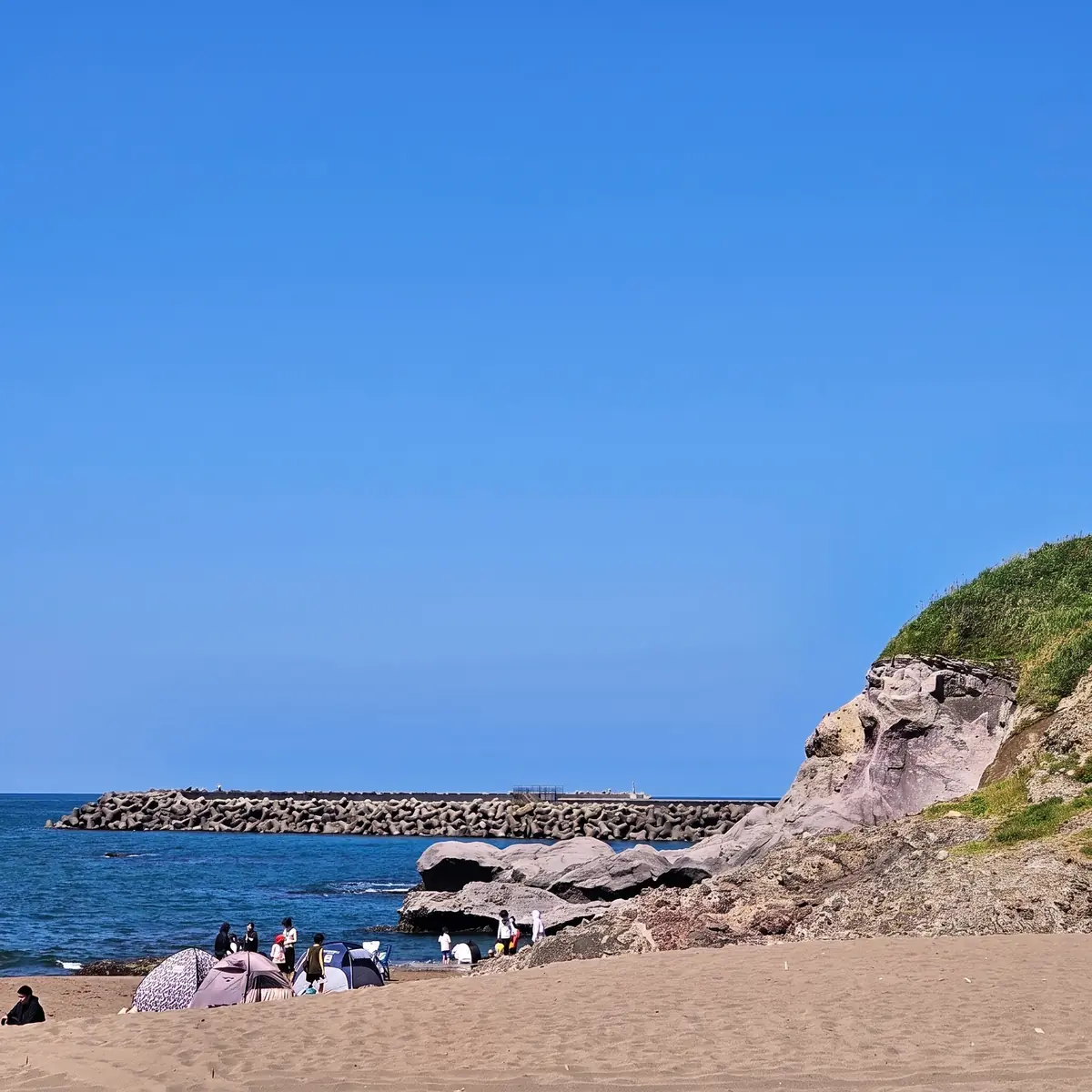
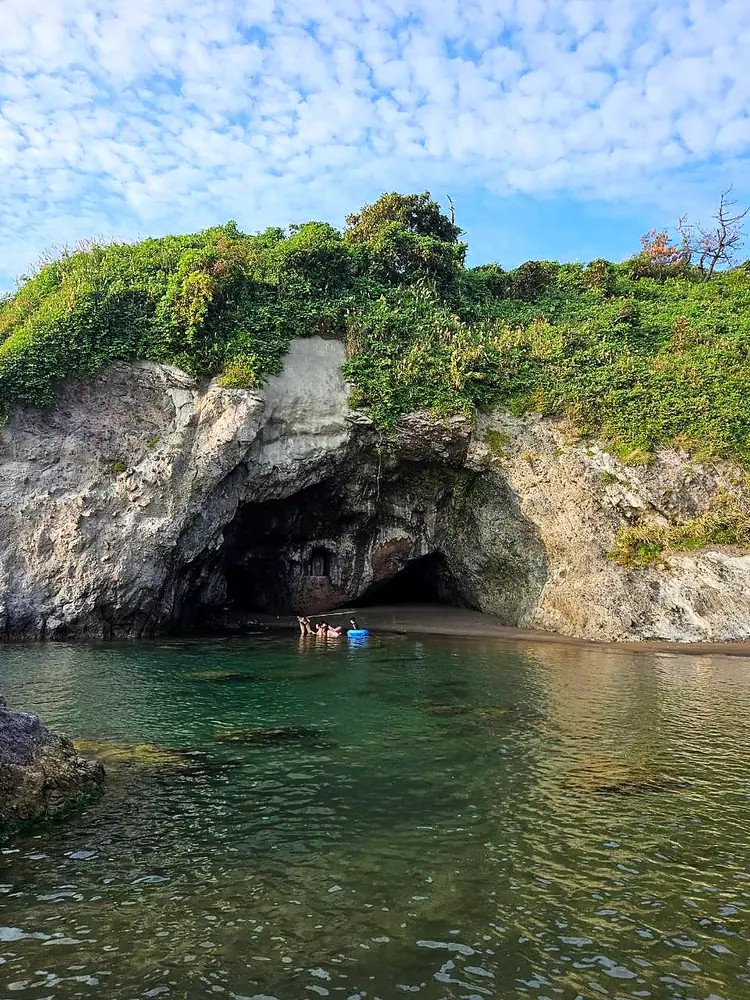
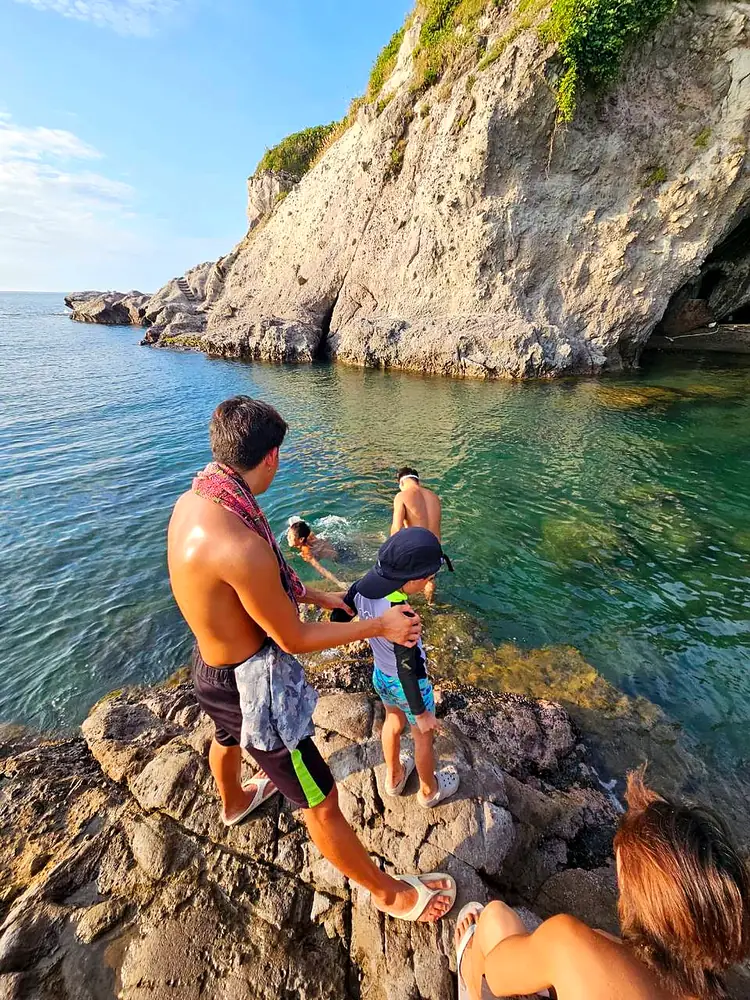
Right where the sand ends, the shore turns to rock, with small coves and pools. When the tide drops, seawater stays behind in the hollows and those pools fill with life: crabs, hermit crabs, tiny fish, sea snails, anemones clinging to the stone. Children who won't go near the waves will happily spend two hours here with a bucket.
The sea itself is shallow a long way out and usually calm, and the water is graded AA for quality in most years. Lifeguards are posted on the beach on selected dates in July and August only, and there are days inside that window with nobody on duty, so the person watching your children is you.
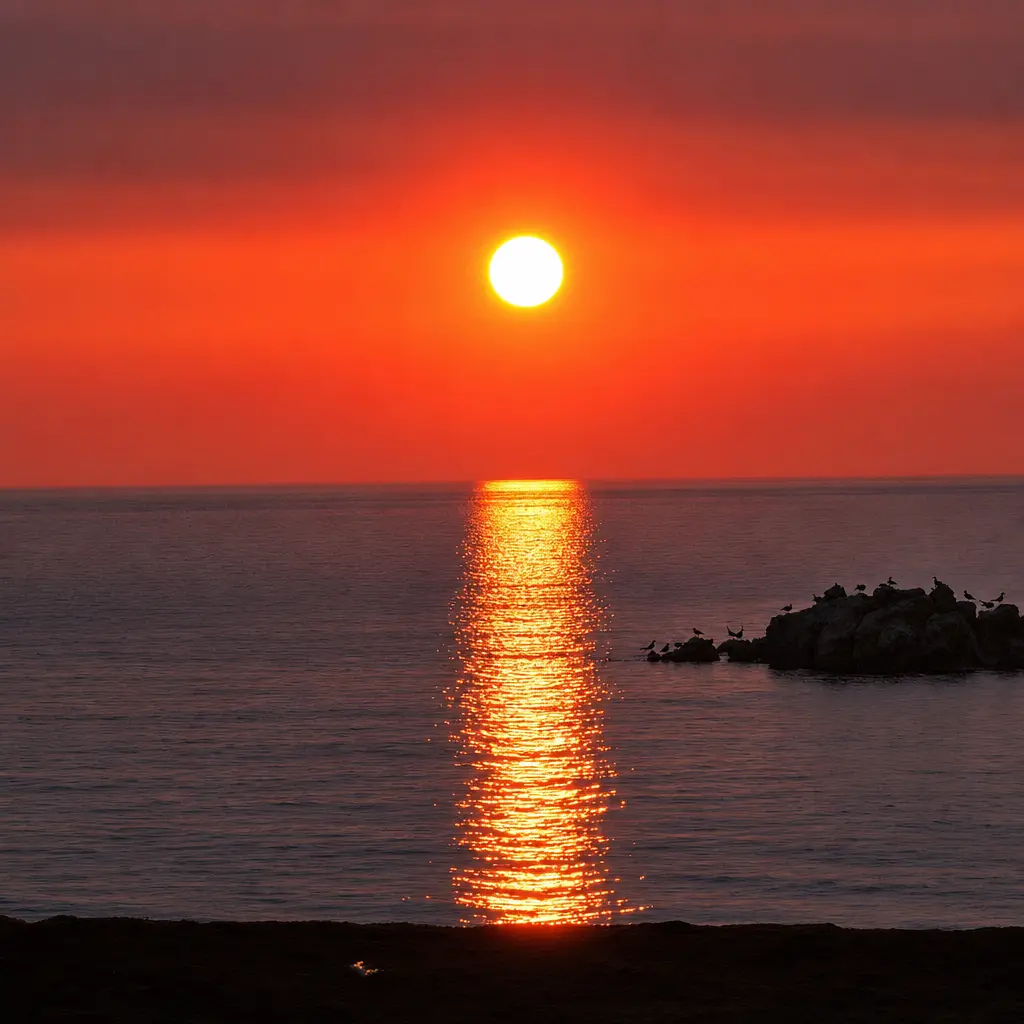
The other thing worth staying for is the sunset. Kujiranami faces west into the Sea of Japan, which is a large part of why it's on the list of Japan's hundred finest shores: the sun goes down into the water rather than behind a hill.
When to come
- Early morning
- We open at 7:00. Before nine the sea is at its calmest and emptiest, and on a hot day those are the most comfortable hours you'll get.
- Mid-July to early August
- The water is warming up and the beach is busy without being packed. Weekdays are genuinely quiet.
- Obon, mid-August
- The busiest stretch of the year. On those days the seats can be gone by ten or eleven in the morning, so come early or book ahead.
- Late August
- Underrated. The water is still warm and the crowds have thinned. One thing to know: the lifesavers have finished by then, so you are watching the water yourselves.
Booking a seat
You don't need a booking. Most days you can simply turn up.
On busy weekends and over the Obon holiday in mid-August, the seats can be gone by ten or eleven in the morning. If you're coming on one of those days, either arrive early or book ahead.
To book, message us on LINE — ideally the day before you come. Sending the message is not the booking: it's confirmed only once we've replied to say so. During opening hours we're busy, so a reply can take a while.
Worth knowing before you come
- You can't barbecue on the sand
- A Kashiwazaki city by-law forbids visitors from having their own barbecue on the beach. We run barbecues here at the beach house instead — book in advance, with the food included or bringing your own.
- Bringing your own food and drink
- We're a restaurant, and public health rules mean we'd rather you didn't. If you have to, there's a small charge and we'll ask you to eat outside rather than at your seat. Tell our staff if you turn up with a cool box.
- Valuables
- There are no coin lockers on the beach. Reception will look after valuables for a small fee — just ask.
- Swimming and children
- Kashiwazaki City posts lifeguards on Kujiranami on selected dates in July and August, and publishes those dates each season. Even within that window there are days with nobody on duty, and by late August they have finished for the year. Whichever day you come, watch your own children and get out of the water if the sea picks up.
- Jellyfish
- The old rule of thumb — that jellyfish arrive once Obon is over — no longer holds here; it varies from year to year and even day to day, and they can turn up earlier than people expect. Have a look at the water when you arrive and ask us, and a rash guard is the easy answer whenever you come.
- Heat
- Japanese summers are severe. Drink more than you think you need, and use the shade — that's half the reason a beach house exists.
- Bad weather
- We open in almost any weather. We only close when the sea or the forecast makes it unsafe, and that decision can come at short notice, so on a rough day it is worth having a fallback plan.
Getting in touch
LINE is how to reach us. Bookings, groups, barbecues and evening use are all arranged there.
Write to us in English, or whatever language you're most comfortable in — we translate, so there's no need to switch to Japanese for us.
This page was last updated on September 22, 2026.